How to Choose Transformers for High and Low Current Loads?

Time:2026-10-18 Author:Ethan
0%

Selecting a transformer is not simply a matter of matching voltage ratings. Current level, load behavior, duty cycle, installation space, and cooling conditions all affect the decision. The right unit must deliver stable power without excessive heat, noise, or energy loss.

This guide explains How to choose transformers for high and low current environments using practical engineering principles. High-current systems often require thick conductors, strong terminals, low impedance, and careful thermal management. A factory motor starter may create a sharp inrush current, while a control circuit may draw only a few amps continuously. These loads cannot be evaluated in the same way. Small details matter.

Reliable selection begins with verified nameplate data, measured load demand, and the manufacturer’s technical documentation. Engineers should review apparent power in VA or kVA, primary and secondary voltages, frequency, regulation, insulation class, and short-circuit performance. Applicable electrical standards and qualified professional review also support safer decisions. Never rely on wattage alone.

Real installations can be less predictable. A transformer that works well in a clean laboratory may overheat inside a dusty enclosure. That assumption deserves testing. Ambient temperature, ventilation, harmonics, and future load growth should be checked before purchase. Sometimes, a larger transformer appears wasteful but provides valuable operating margin. Sometimes, oversizing increases cost and reduces efficiency. Careful measurement, conservative calculations, and documented testing create a more dependable choice for both high- and low-current applications.
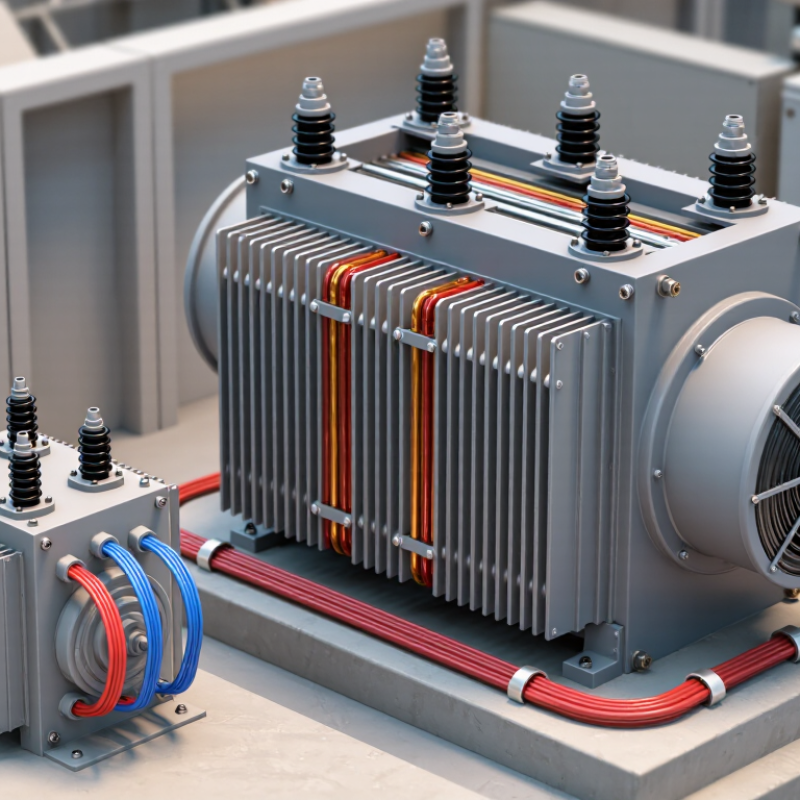
How to Choose Transformers for High and Low Current Loads?

Understanding Transformer Ratings for High- and Low-Current Loads

How to Choose Transformers for High and Low Current Loads?

Understanding Transformer Ratings for High- and Low-Current Loads

Transformer selection starts with voltage, frequency, and apparent power, measured in volt-amperes (VA). A 1,000 VA unit can supply about 8.3 amperes at 120 volts. At 12 volts, the same rating permits roughly 83 amperes. The current changes with voltage. The VA rating does not.

A 1,000 VA unit can supply about 8.3 amperes at 120 volts.
At 12 volts, the same rating permits roughly 83 amperes.
The current changes with voltage. The VA rating does not.

For a high-current, low-voltage load, inspect terminals, winding resistance, and heat removal. Thick conductors reduce losses and limit voltage drop. A motor, solenoid, or capacitor input may draw sharp inrush current. Surges matter. That surge can exceed running current several times. Choose a transformer that tolerates the surge, not only the nameplate load.

For low-current, high-voltage circuits, insulation spacing and dielectric strength become more important. Check primary and secondary ratings carefully. Never treat small current as a small hazard.

Real installations also face ambient heat, continuous duty, harmonics, and poor ventilation. I have found that a comfortable calculation can still produce a hot enclosure. Apply derating guidance, then verify temperatures under the expected load. Use fuses or breakers suited to transformer inrush. Measure secondary voltage while the load operates. Measure under load. A no-load reading can mislead. Transformers also have regulation, so output voltage may fall under load. Leave practical headroom, but avoid gross oversizing, which can increase cost and standby losses. The final choice should reflect measurements, not confidence in a tidy formula.

Matching Voltage, Current, and Power Requirements

Selecting a transformer starts with matching voltage, current, and apparent power, not with kVA alone. Confirm the primary and secondary voltages under real operating conditions. A 230-volt load drawing 8 amps requires 1,840 VA. With a practical 25% reserve, a transformer near 2.3 kVA is more suitable. That reserve supports startup surges and moderate future growth.

For high-current loads, calculate inrush current, duty cycle, and conductor temperature. Motors, solenoids, and capacitive equipment may briefly demand several times their running current. Low-current control circuits still need stable voltage regulation, especially across long cables. The transformer’s frequency, insulation class, ambient temperature, and permissible temperature rise must also match the installation. A field panel beside a hot furnace cannot be evaluated like a cool laboratory cabinet. Small details matter.

The International Energy Agency’s Electricity Grids and Secure Energy Transitions report identifies transformer losses as roughly 2–3% of global electricity consumption. Efficiency deserves attention, even on lightly loaded units. The U.S. Department of Energy’s 2024 technical support documentation projects substantial lifecycle savings from improved distribution-transformer efficiency. Yet a higher-efficiency unit is not automatically the correct choice. Harmonic currents can increase heating, while an oversized transformer may operate inefficiently at low load. One assumption deserves review: nameplate current is not always the operating current. Measure the load, check peak demand, and question the spreadsheet.

Choosing the Right Transformer Type for Each Load

How to Choose Transformers for High and Low Current Loads?

Choosing the right transformer type begins with the load, not the enclosure size. Record the input voltage, output voltage, frequency, current, and operating duty. Then calculate apparent power in volt-amperes. A transformer rated only by voltage can overheat during normal operation.

High-current loads usually need a low-voltage, high-VA transformer with strong thermal performance. Motors, solenoids, and heating elements may draw several times their running current at startup. Check inrush current carefully. A design that works on paper may still trip protection devices in the field. Larger terminals and shorter conductors can also reduce voltage drop. Measure the actual cable length.

Low-current loads often require a different transformer type. Control circuits may benefit from an isolation transformer, while sensitive measurement equipment needs stable voltage and low electrical noise. For electronic devices, a transformer may need a separate rectifier, filter, or regulator. It is not automatically a complete power supply.

Environmental conditions also influence selection. Dust, moisture, heat, and limited ventilation can reduce the practical rating. Leave reasonable capacity for future changes, but avoid excessive oversizing. An oversized transformer may cost more and perform poorly at light loads. I have seen specifications focus heavily on current while ignoring frequency and duty cycle. That oversight deserves another review. Check installation clearances, protective devices, and temperature rise before approval.

How to Choose Transformers for High and Low Current Loads?

Choosing the Right Transformer Type for Each Load

Low-current loads

Control and isolation transformers with lower VA ratings are suitable for sensors, relays, instrumentation, and other modest loads. Higher secondary voltage produces lower current for the same VA rating.

High-current loads

Power or rectifier transformers with higher VA ratings are better suited to motors, actuators, battery chargers, and DC power supplies. Confirm inrush current, duty cycle, cooling, and rectifier requirements before selecting.

The chart shows nominal secondary current calculated from the apparent-power relationship I = VA ÷ V. Values are ideal nominal examples; transformer efficiency, regulation, temperature rise, continuous-duty limits, and startup current must also be considered.

Checking Efficiency, Heat, and Protection Needs

Choosing a transformer for high or low current loads starts with the real load profile, not only the nameplate rating. High-current, low-voltage equipment creates greater copper losses because heat rises with I²R. A transformer operating near its limit may feel acceptable during testing, then overheat during repeated motor starts. For low-current loads, oversizing can also waste energy through continuous core losses.

The U.S. Department of Energy reports that distribution transformer losses consume about 61 billion kWh annually in the United States. Its technical analysis also links these losses to roughly 2.5% of national electricity use. These figures make efficiency more than a purchasing detail. Check no-load and load-loss values separately. IEC 60076 guidance also emphasizes temperature rise, insulation performance, and short-circuit withstand. A lower impedance may improve voltage regulation, but it can increase fault current. Protection must match both conditions.

Tips: Record starting current, average demand, ambient temperature, and daily operating hours. Select enough kVA for continuous loads, but avoid excessive oversizing. Confirm the enclosure, cooling method, fuses, breakers, and coordination study. For high-current systems, inspect cable termination temperatures with infrared equipment after installation. Small details matter. In practice, calculations can still miss harmonic heating or poor ventilation. Review the design with a qualified engineer and compare measured performance after commissioning.

Comparing Installation Conditions and Long-Term Reliability

Choosing a transformer for high or low current loads starts with the installation environment, not the nameplate alone. A high-current unit may need thick conductors, clear ventilation paths, and stronger supports because heat and weight increase quickly. Low-current applications seem easier, but cramped cabinets can still trap heat around terminals. Measure actual load patterns. Short peaks matter.

During site inspections, I check ambient temperature, dust, moisture, cable bending space, and access for tightening connections. A transformer beside a furnace faces a different aging process than one placed in a clean electrical room. For high-current systems, loose lugs create hot spots that infrared checks can reveal before insulation darkens. For low-current systems, poor shielding or undersized protection can cause nuisance trips and hidden stress. These details are easy to miss.

Long-term reliability depends on temperature cycling, moisture control, and realistic maintenance intervals. Review certified test data, temperature-rise limits, insulation ratings, fault withstand capability, and enclosure protection. Have a qualified professional verify the installation against local electrical codes. Do not trust a single calculation. I have seen “safe” selections fail after future load growth was ignored. Leave service clearance, label circuits, and record connection torque for later inspections. A conservative choice can still be wrong when conditions change.

How to Choose Transformers for High and Low Current Loads? - Comparing Installation Conditions and Long-Term Reliability

General selection guide for current transformers used in metering, protection, and monitoring applications

Comparison of Current Transformer Selection Factors
Selection Criterion Low-Current Loads
Typical Application Considerations
High-Current Loads
Typical Application Considerations
Selection and Reliability Implication
Typical Primary Current Often below 100 A, including lighting circuits, control panels, small motors, and electronic loads. Commonly several hundred amperes to several thousand amperes in switchboards, feeders, generators, and large motors. Select the primary rating nearest to the actual full-load current. Oversizing the ratio can reduce measurement resolution at normal operating current.
Recommended Ratio Approach Use a ratio that allows the normal operating current to remain within the effective measurement range, especially when loads vary significantly. Use a ratio that accommodates continuous load current, expected overloads, and the equipment short-circuit duty. The ratio should be coordinated with the meter or relay input and should not be selected solely from the maximum possible fault current.
Accuracy Priority Measurement accuracy at low percentages of rated current is usually important for energy monitoring and load balancing. Accuracy under high current and fault conditions is important for protection, revenue metering, and system coordination. Metering transformers are normally specified by an accuracy class and burden. Protection transformers require suitable protection performance, often including a specified accuracy-limit factor or knee-point requirement.
Common Accuracy Classes Common metering classes include 0.1, 0.2, 0.5, and 1.0, depending on the measurement purpose and applicable standard. Common protection classes include 5P or 10P, while specialized protection applications may require PX, TP, or equivalent performance specifications. Accuracy class designations are not interchangeable. Confirm the applicable IEC or IEEE/ANSI requirements before ordering.
Rated Burden Usually low, often between 1 VA and 10 VA for compact electronic meters with short secondary wiring. May be higher when secondary leads are long or when multiple relays and meters share the same core; typical specified values may range from 5 VA to 30 VA or more. Calculate the total burden from the connected instruments, test switches, terminal blocks, and lead resistance. The connected burden should not exceed the rated burden.
Secondary Wiring Short wiring runs are common, so voltage drop and lead resistance are usually modest. Longer runs and multiple connected devices can create substantial impedance and may affect protection accuracy. Use appropriately sized secondary conductors, minimize unnecessary connections, and include accessible test terminals for commissioning and maintenance.
Installation Space Split-core or window-type designs can be practical where panel space is limited and the circuit cannot easily be disconnected. Bar-type, wound-primary, or large window-type designs may be required because of busbar dimensions, insulation clearances, and mechanical forces. Verify aperture size, conductor dimensions, mounting orientation, terminal access, creepage, clearance, and enclosure compatibility before installation.
Installation Conditions Often installed inside low-voltage distribution boards, control cabinets, or compact monitoring panels. Frequently installed in switchgear, motor-control centers, substations, generator terminals, or outdoor equipment subject to higher thermal and mechanical stress. Check ambient temperature, altitude, humidity, pollution degree, vibration, enclosure rating, and indoor or outdoor suitability against the applicable product standard.
Thermal Performance Heating is generally lower, but continuous operation above the rated current can still cause insulation aging and accuracy drift. Higher conductor current creates greater thermal stress. Short-time thermal current and continuous thermal current ratings are especially important. Choose a transformer with adequate continuous thermal current and short-time thermal current ratings for the installation. Provide ventilation where required.
Short-Circuit Withstand Fault levels may be lower, but the transformer must still withstand the prospective short-circuit current of the panel. High-current installations can impose significant electrodynamic forces during faults. Check both short-time thermal current, commonly specified for a defined duration such as 1 second, and dynamic withstand current. These ratings must match the system fault level.
Core Saturation Risk Large ratio errors can occur if the selected transformer is poorly matched to a very low operating current or if the burden is excessive. Protection cores can saturate during faults when the secondary burden, DC offset, or fault current exceeds the design capability. For protection, evaluate fault current, X/R ratio, secondary resistance, lead resistance, and relay burden. For metering, verify accuracy across the expected operating-current range.
Safety During Maintenance Even small current transformers can generate dangerous secondary voltages if the secondary circuit is open while primary current flows. The hazard is more severe because the primary current and available fault energy are higher. Never open-circuit an energized current-transformer secondary. Short the secondary through an approved shorting terminal or test block before disconnecting instruments.
Insulation Requirements Low-voltage systems commonly require insulation coordinated with the equipment rated voltage and transient overvoltage environment. Medium-voltage and high-voltage installations require greater insulation level, impulse withstand, creepage, clearance, and partial-discharge performance. Specify rated insulation voltage, power-frequency withstand voltage, and lightning impulse withstand voltage where applicable. Match the transformer to the system voltage category.
Environmental Protection Indoor cabinet installations may be adequately protected by the enclosure, provided condensation and contamination are controlled. Outdoor or industrial installations may be exposed to rain, dust, salt, chemicals, temperature cycling, and vibration. Use a suitable enclosure or ingress-protection level and confirm resistance to humidity, corrosion, UV exposure, and vibration for the actual site conditions.
Long-Term Reliability Reliability depends mainly on correct ratio selection, secure terminals, insulation integrity, and avoiding excessive burden. Reliability is strongly affected by thermal cycling, mechanical fault forces, insulation aging, moisture ingress, and continuous overload. Specify adequate margins rather than operating continuously at the limits. Inspect terminals, insulation, temperature rise, and secondary circuits during scheduled maintenance.
Commissioning Tests Ratio, polarity, insulation resistance, secondary continuity, and functional meter checks are typically appropriate. In addition to ratio and polarity, protection installations may require excitation or saturation testing, burden verification, and relay injection testing. Record test results as a baseline for future maintenance. Follow the transformer and protection-system manufacturer instructions without energizing an open secondary.
Best-Fit Design Choice Prioritize measurement sensitivity, compact installation, low burden, and accurate performance at normal operating current. Prioritize thermal and dynamic withstand, insulation coordination, fault-current performance, mechanical strength, and protection accuracy. The best transformer is determined by the complete application: current range, system voltage, fault level, burden, environment, accuracy requirement, and applicable standard.

Note: The current ranges and burden values shown are representative engineering guidance rather than universal limits. Final selection should be verified against the applicable IEC or IEEE/ANSI standard, system fault study, instrument requirements, and installation conditions.

FAQS

How should I size a transformer for a 230-volt, 8-amp load?

Calculate 230 × 8 = 1,840 VA. Add about 25% reserve for startup and moderate growth. A unit near 2.3 kVA may fit.

Why is kVA alone not enough for transformer selection?

Voltage, current, frequency, insulation, temperature, and load behavior also matter. Nameplate current may not equal operating current. Measure the load.

How should I handle motors and other high-starting-current equipment?

Record inrush current and starting duration. Motors and capacitive equipment may draw several times their running current. Test repeated starts, not one start.

Can an oversized transformer waste energy?

Yes. Oversizing reduces load losses but increases continuous core losses. A lightly loaded unit may operate inefficiently. Bigger is not always better.

What efficiency details should I compare?

Review no-load losses and load losses separately. Also check temperature rise and expected daily operating hours. Small losses become significant over years.

How do harmonics affect transformer performance?

Harmonic currents can increase heating, even when measured current seems acceptable. Check the load spectrum and ventilation. One spreadsheet may miss this.

What installation conditions should I inspect?

Check ambient heat, dust, moisture, airflow, cable space, and service access. A unit beside a furnace needs more caution than one in a cool room.

What protection and maintenance checks are important?

Match fuses, breakers, impedance, and fault withstand capability. Tighten and record connection torque. Inspect hot terminals with infrared equipment after commissioning.

How can I improve long-term reliability?

Leave service clearance and allow for realistic future load growth. Review temperature cycling and maintenance intervals. I would not trust one calculation alone.

Conclusion

Selecting the right transformer begins with understanding the demands of the connected load. To learn how to choose transformers for high and low current environments, evaluate the required input and output voltage, operating current, apparent power, and expected load variation. High-current applications generally require transformers with adequate conductor capacity and strong thermal performance, while low-current circuits may prioritize precise voltage regulation, compact size, and stable operation. The transformer type should also match the application, whether isolation, step-up, step-down, or control voltage conversion is needed.

Efficiency, heat dissipation, and protection are equally important. Check losses, cooling requirements, overload tolerance, short-circuit protection, and insulation ratings before making a selection. Installation conditions—including available space, ventilation, humidity, dust, vibration, and accessibility—can significantly affect performance and service life. A reliable choice balances electrical ratings with environmental suitability, maintenance needs, safety provisions, and long-term operating costs, ensuring dependable power delivery under both normal and changing load conditions.

Ethan

Ethan

Ethan is a seasoned marketing professional with a deep expertise in our company's innovative product line. With a passion for sharing knowledge and insights, he takes the lead in regularly updating our corporate blog, where he explores industry trends, product features, and effective marketing......